Reforms and herd management
To keep animals at the top of their technical performance, and to take advantage of genetic progress, it is normal to cull certain cows and introduce heifers into the herd. We speak of voluntary culling when the farmer decides to cull a cow that does not meet his expectations, in terms of milk quantity or rate, or calving period. Culling is when the farmer is forced to cull a cow with health problems. Mastitis, infertility and lameness top the list of the most frequent causes of culling.
Origin of lameness
In 90% of cases, this is due to nail wounds or infections (sole ulcers, panaris, interdigital dermatitis). Lameness can also be caused by joint problems or poor horn wear.
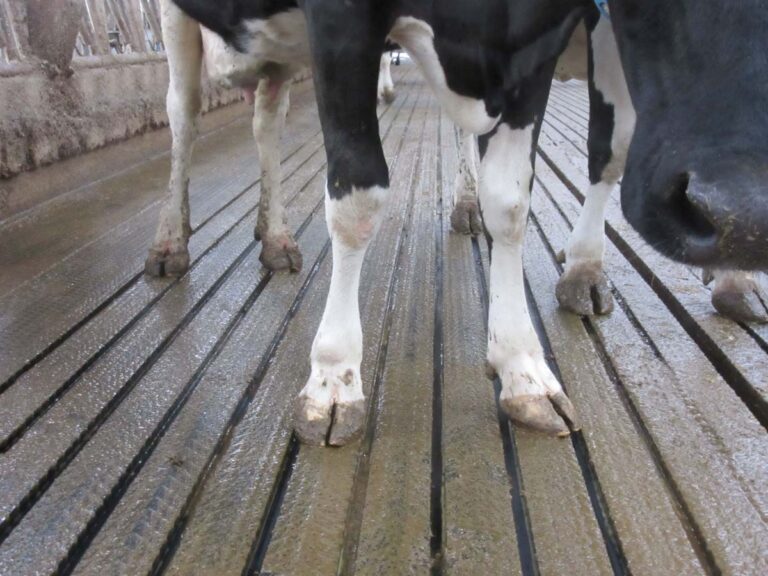
On a hard, abrasive floor, The horn is weakened and sole injuries are more frequent. Humidity and stagnant droppings are aggravating factors by promoting bacterial growth.
Lameness increases the risk of culling
Lameness triples the risk of early reform. Indeed, a cow with a limp will move less to eat and drink, and her production level will suffer as a result. The Institut de l'élevage estimates that in the event of severe lameness, the milk production may fall to 36%. What's more, a cow with sore feet is less likely to express heat. It will therefore be more difficult to identify the right moment to inseminate her. The result is a rate of non-pregnant cows multiplied by 15 for cows with recurrent lameness problems. Added to these production losses is the time spent treating lameness and its direct cost, estimated at around €250. All the more reason for an early cull.
The financial impact of this early cull is all the greater if we take into account the cost of rearing a heifer, which is around €1,500. It will take 2.5 lactations to recoup this cost through the sale of her milk. If you have to cull her before that, you lose money because the cull price won't offset the cost of rearing her.
Invest in Magellan carpets to reduce culling due to lameness
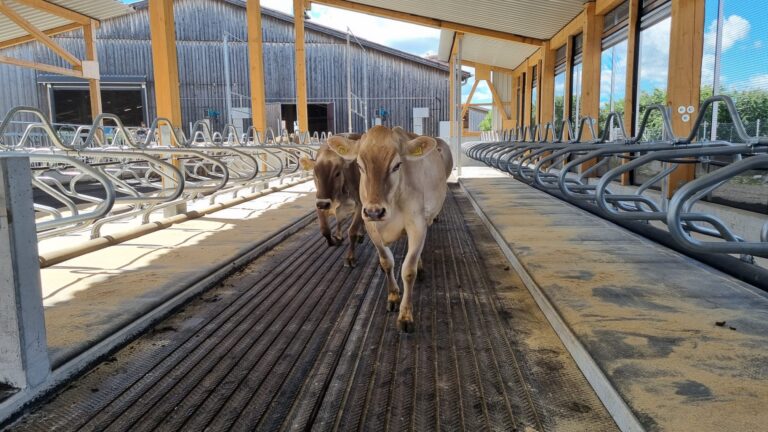
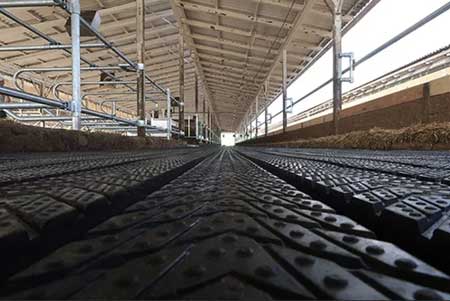
Before installing Magellan carpet In the stabling of Gaec Etang de la Roche, located in Marsac sur Don (44), scarification of the concrete had an abrasive effect on the sole of the hooves, causing numerous lesions. «All the primiparous cows started limping. Half the herd experienced more or less severe lameness, and around twenty cows out of 180 were culled for this reason», recalls Stéphane Roué, one of the Gaec's partners. « With the installation of the mats, in 6 months we went from 25% of cows with lameness to only 2 or 3%.. The cull rate for lameness is almost 0 ».